Article 12 says a child capable of forming their own views has the right to express them freely in all matters affecting them — including custody hearings and care reviews. It assumes the child is in the room. In twenty years, I have rarely seen that assumption hold.
Article 12 of the UN Convention on the Rights of the Child says that a child capable of forming their own views has the right to express them freely, in all matters affecting them — and that those views have to be given weight according to the child's age and maturity. It specifically names judicial and administrative proceedings. Custody hearings. Care reviews. The exact rooms I've spent twenty years standing in.
Here's what that article assumes: that somewhere in the process, someone actually asks. In twenty years, I have sat in more rooms than I can count where a child's future was decided — and the child was down the hall, in a waiting area, sometimes literally not in the building. Their view was represented. Usually by an adult summarizing it in a paragraph, in a report, written days before the hearing.
I want to be precise about what I'm criticizing here, because it's not the professionals. A judge with forty minutes and six cases that afternoon is not choosing to skip the child. The system has decided, structurally, that a child's direct voice is something to be gathered in advance and translated — not something to be present for.
And here's where this gets sharper. UNICEF's own guidance on AI and children has to explicitly state, as a requirement, that when an AI system informs a decision affecting a child, "the final decisions must be made by humans." Sit with that for a second. If a major international guidance document has to spell that out, in December 2025, it means somewhere, this is already blurring closely enough that it needed saying out loud. We haven't fixed the problem of children not being heard directly. We've just created a new, faster-sounding reason for adults to feel comfortable skipping the hardest part of actually listening.
I don't have a five-step fix for this. What I have is twenty years of watching this specific gap, and a piece of paper that's had the answer since 1989. The right was never missing. The will to build a room the child could actually be in — that's what's missing.
Sources & further reading
- UN Convention on the Rights of the Child, Article 12 — Office of the UN High Commissioner for Human Rights, official treaty text.
- Committee on the Rights of the Child, General Comment No. 12 (2009) on the right of the child to be heard.
- UNICEF, policy guidance on AI and children (December 2025), on the requirement that final decisions affecting children remain human-made.
- Based on 20 years of direct practitioner experience in custody and care-review proceedings. Case details are composited and anonymized.
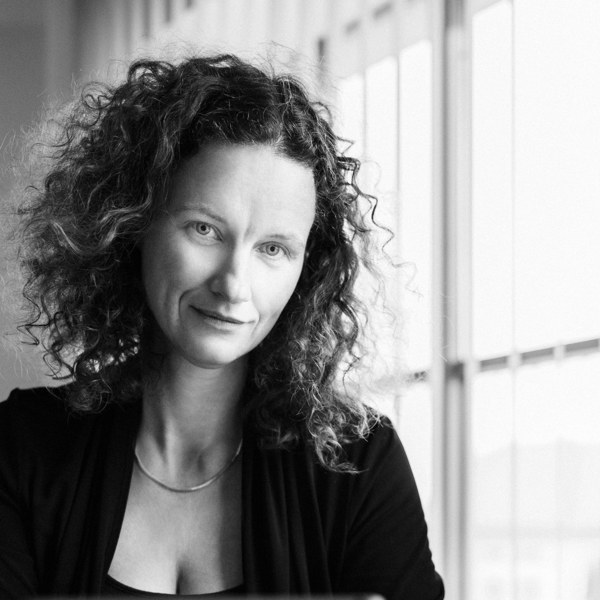
Lucie Straková
20-year child welfare practitioner, transitional foster carer, and founder of Best Interest — a channel and essay series on child rights, systems, and AI. More about Lucie →